ESF and CSMM Celebrate National Leadership in Circularity and TRUE Zero Waste Innovation
At the Center for Sustainable Materials Management (CSMM), we believe that transformative change happens when institutions commit to rethinking the way materials flow through their systems. This month, we’re proud to highlight a new case study that does exactly that—documenting how SUNY ESF has become a national leader in advancing circular economy strategies and demonstrating what’s possible when sustainability is embedded across an entire campus.
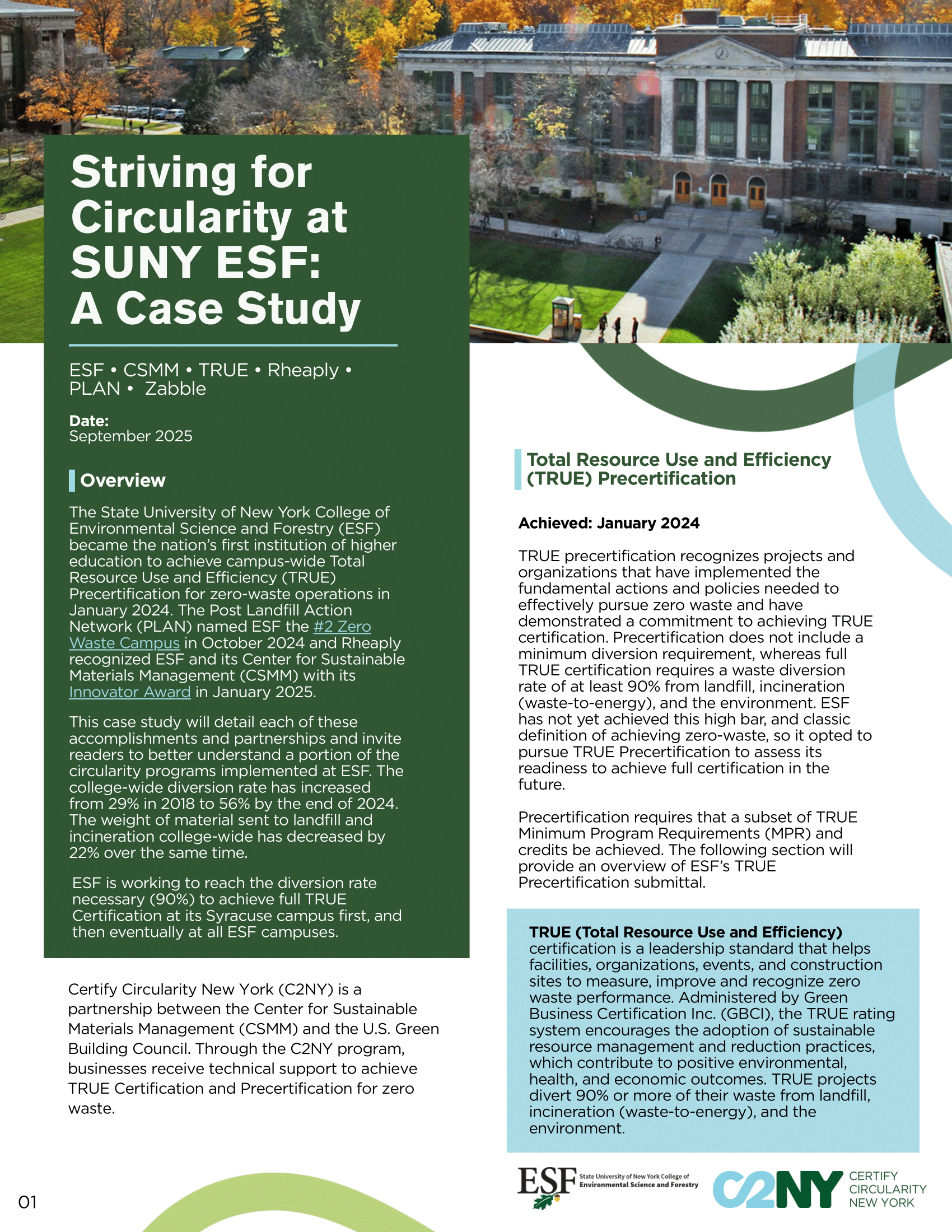
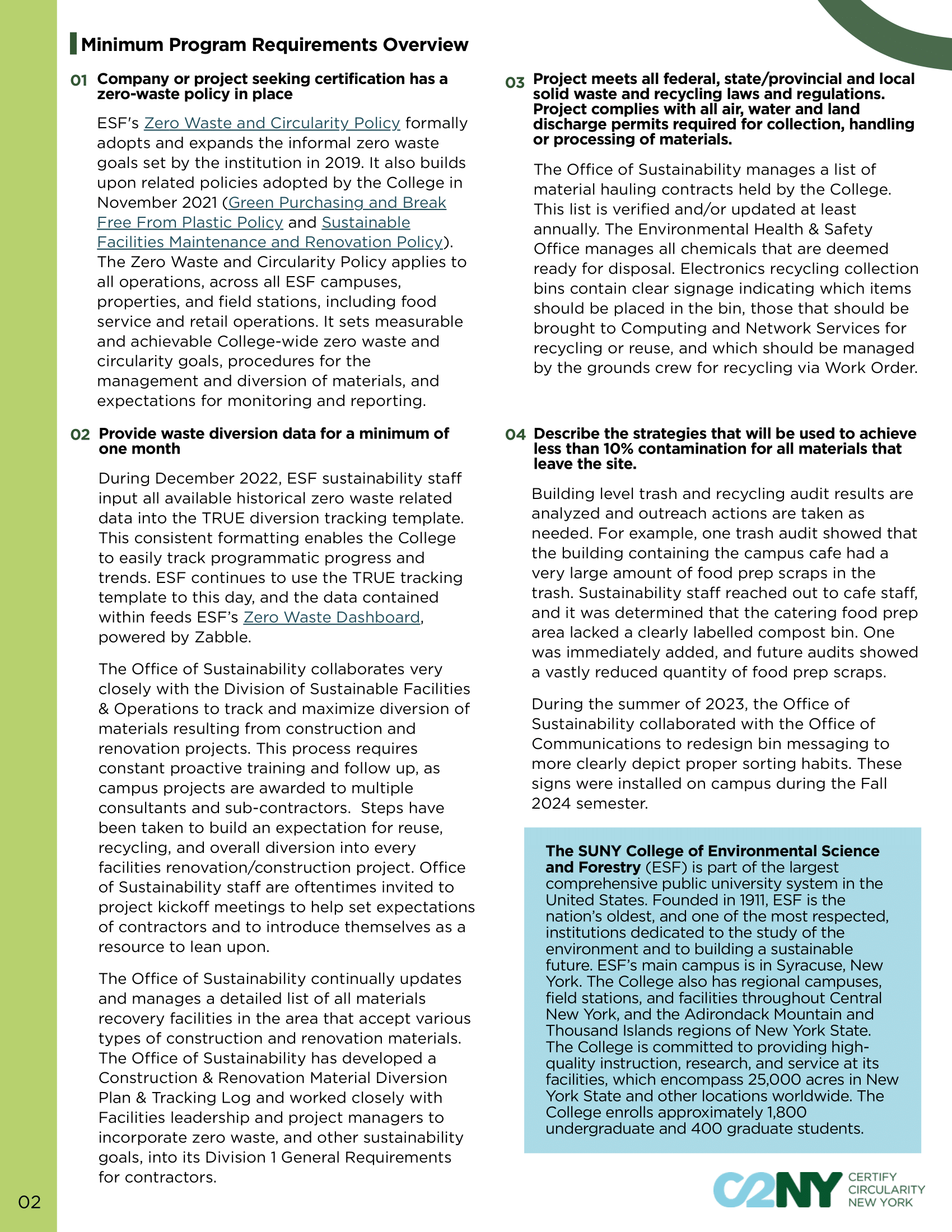
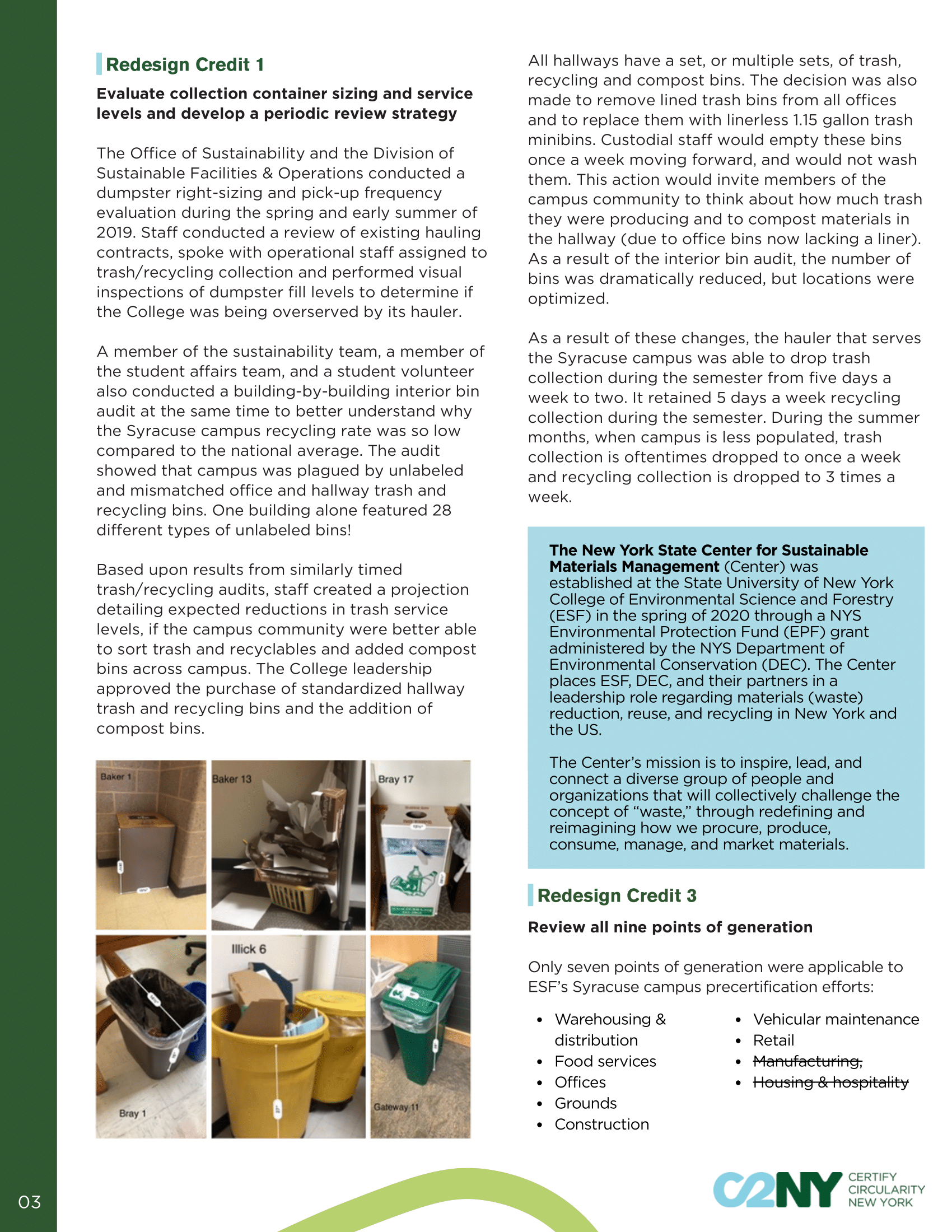
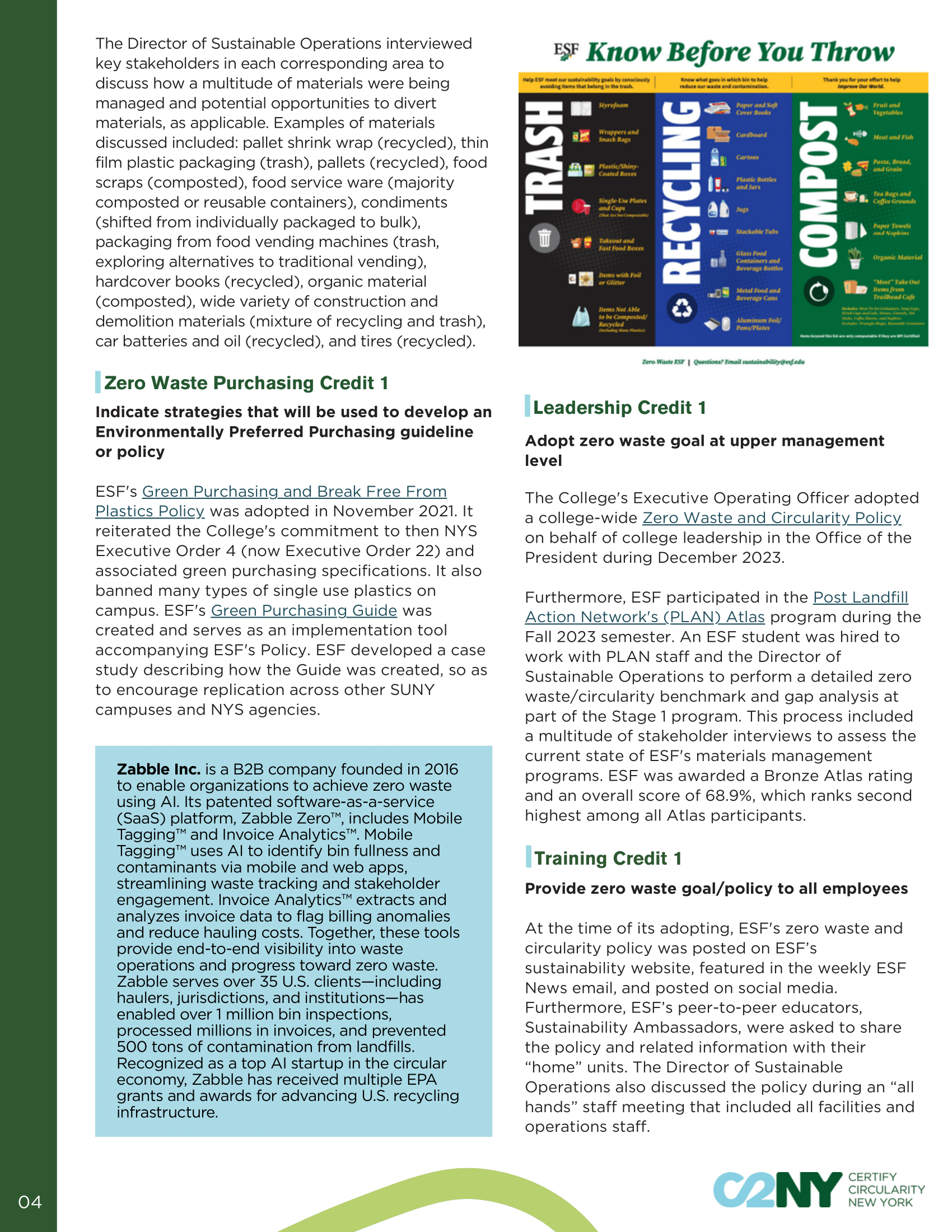
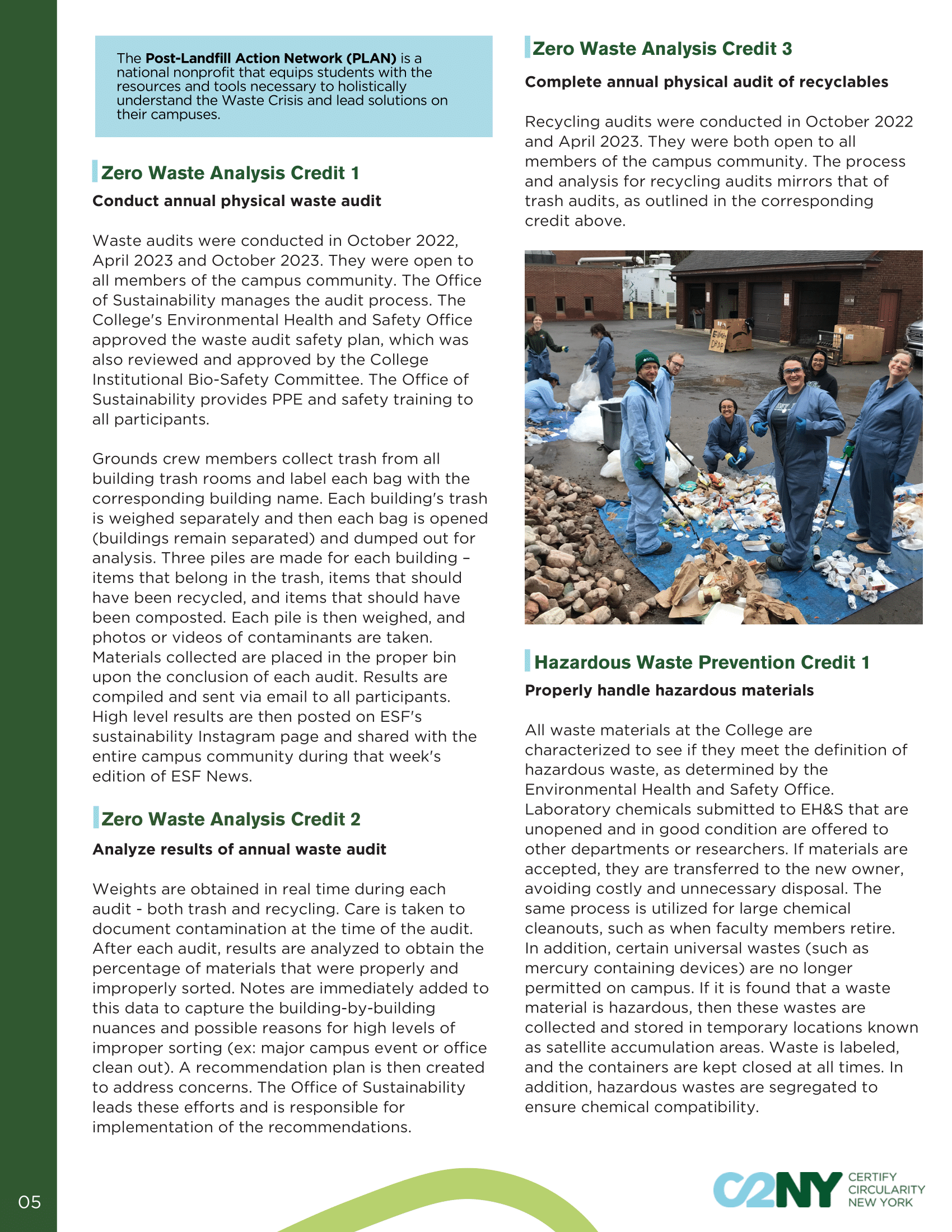
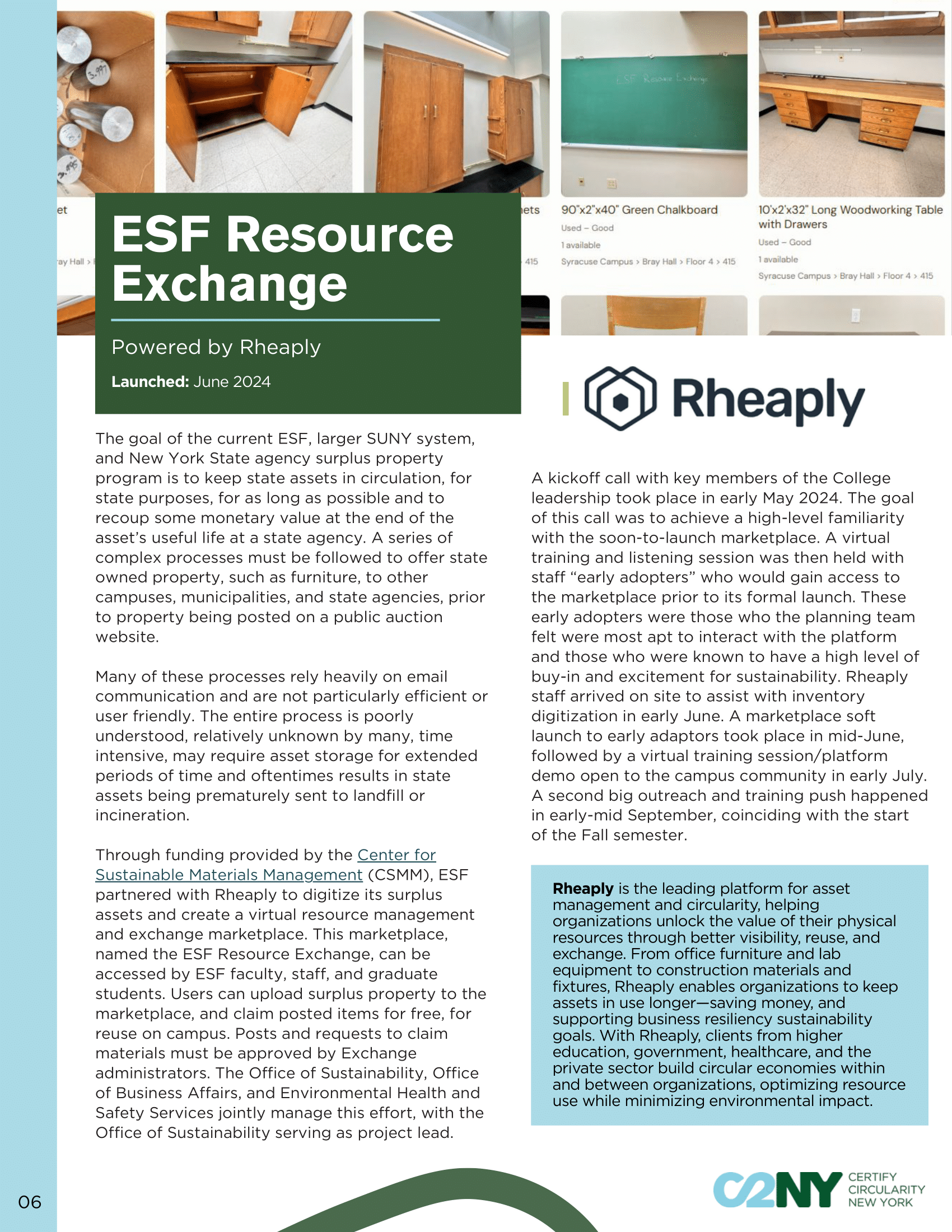
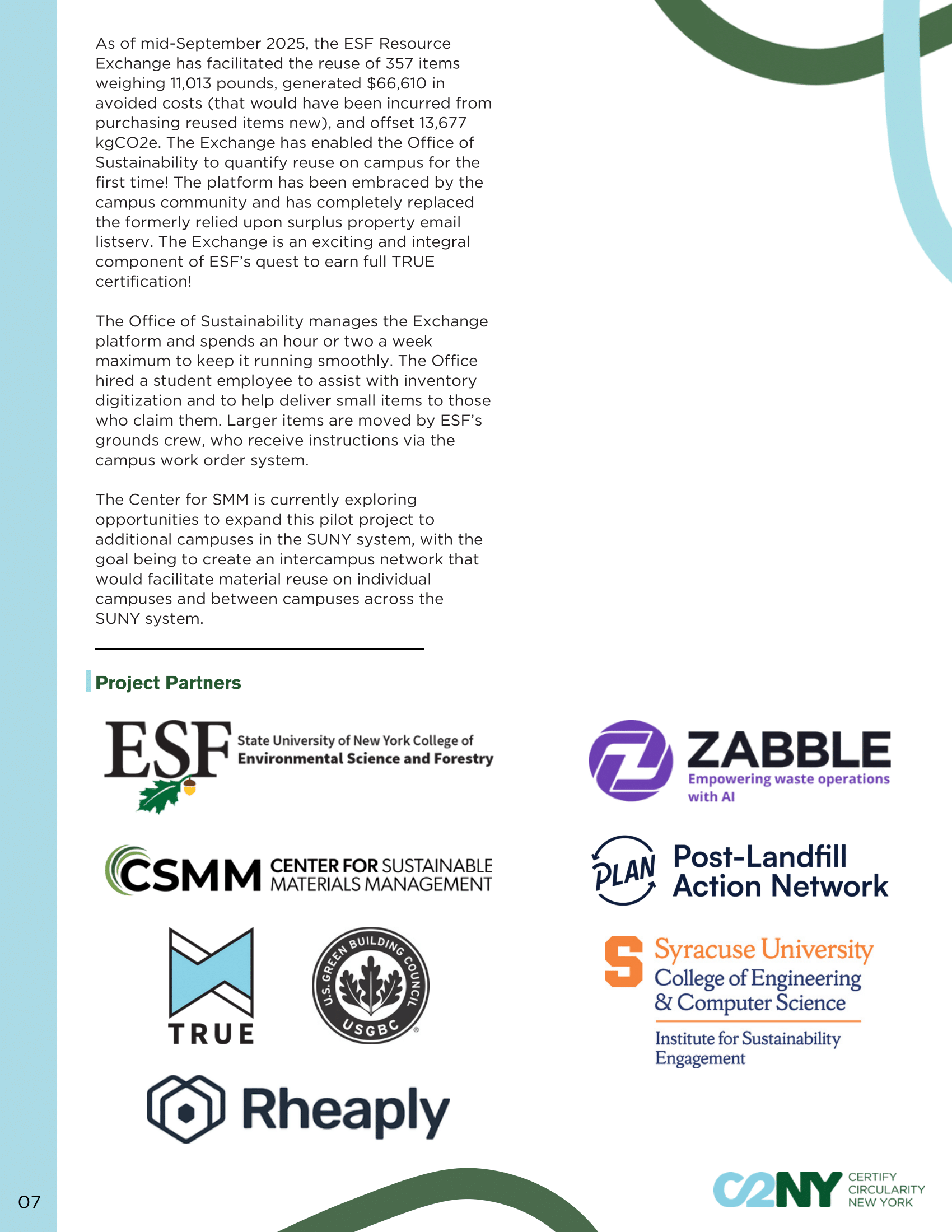
In November 2025, ESF and CSMM released a case study capturing the college’s multi-year journey toward circularity and the systems, partnerships, and behaviors that have made it a model for higher education nationwide.
In January 2024, SUNY ESF became the first college or university in the United States to achieve campus-wide TRUE (Total Resource Use and Efficiency) Precertification for zero waste operations at its Syracuse campus—an achievement awarded by Green Business Certification Inc. (GBCI).
This milestone didn’t just recognize ESF’s operational progress; it affirmed the college’s long-standing commitment to transparency, resource efficiency, and systems change.
Since then, ESF has continued to gain national recognition:
#2 Zero Waste Campus in the nation according to the Post Landfill Action Network (PLAN) in both 2024 and 2025.
Recipient of the Rheaply Innovator Award in 2025 for leadership in circular materials management and reuse infrastructure.
These achievements reflect not only technical progress, but a cultural shift—one driven by students, faculty, staff, and collaborators across the campus.
“This case study tells a story of progress and partnership,” said Sue Fassler, Director of Sustainability at SUNY ESF. “Through collaboration with CSMM and our students, faculty, and staff, we are demonstrating that circular economy principles can be applied at every scale of campus operations—from procurement to reuse—and that these systems can inspire real cultural change.”
Between 2018 and 2024, ESF achieved:
An increase in its waste diversion rate from 29% to 56%
A 22% reduction in landfilled and incinerated material
These improvements were realized through:
Targeted reuse and recycling initiatives
Expanded organics management
Cross-departmental coordination
Alignment with TRUE Zero Waste standards and continuous improvement practices
This work illustrates how systemic change emerges from coordinated, campus-wide collaboration—not single programs in isolation.
“SUNY ESF’s achievement represents a landmark moment for higher education,” said Celeste McMickle, Director of Market Transformation and Development for TRUE with the USGBC. “By integrating TRUE Certification’s zero waste principles campus-wide, ESF demonstrates how institutions can build scalable systems that protect natural resources, reduce emissions, and inspire the next generation of sustainability leaders.”
ESF aims to continue this leadership by working toward the 90% diversion rate required for full TRUE Certification at its Syracuse campus, with long-term plans to expand TRUE-focused practices across all ESF locations statewide.
The case study also highlights the power of partnership. ESF and CSMM collaborated closely with:
Green Business Certification Inc. – The global certifying body for leading sustainability frameworks including LEED and TRUE.
Rheaply – A climate-tech company whose digital platform helps organizations track, reuse, and manage physical assets to reduce waste, costs, and emissions.
Zabble – An AI-powered waste management platform that give organization real-time insights t advance zero-waste programs and reduce costs.
PLAN - A national non-profit that empowers student to lead zero-waste initiatives on their campuses through training, advising, and resource sharing.
These partnerships offer replicable pathways for campuses, municipalities, and businesses to build circularity into their own operations.
The full case study provides actionable insights for anyone working to reduce waste, strengthen reuse systems, or chart a path toward circularity. It offers practical examples, behavior-based strategies, and tools that other organizations can adapt to their own contexts.