
Vape Waste Collection Pilot Program
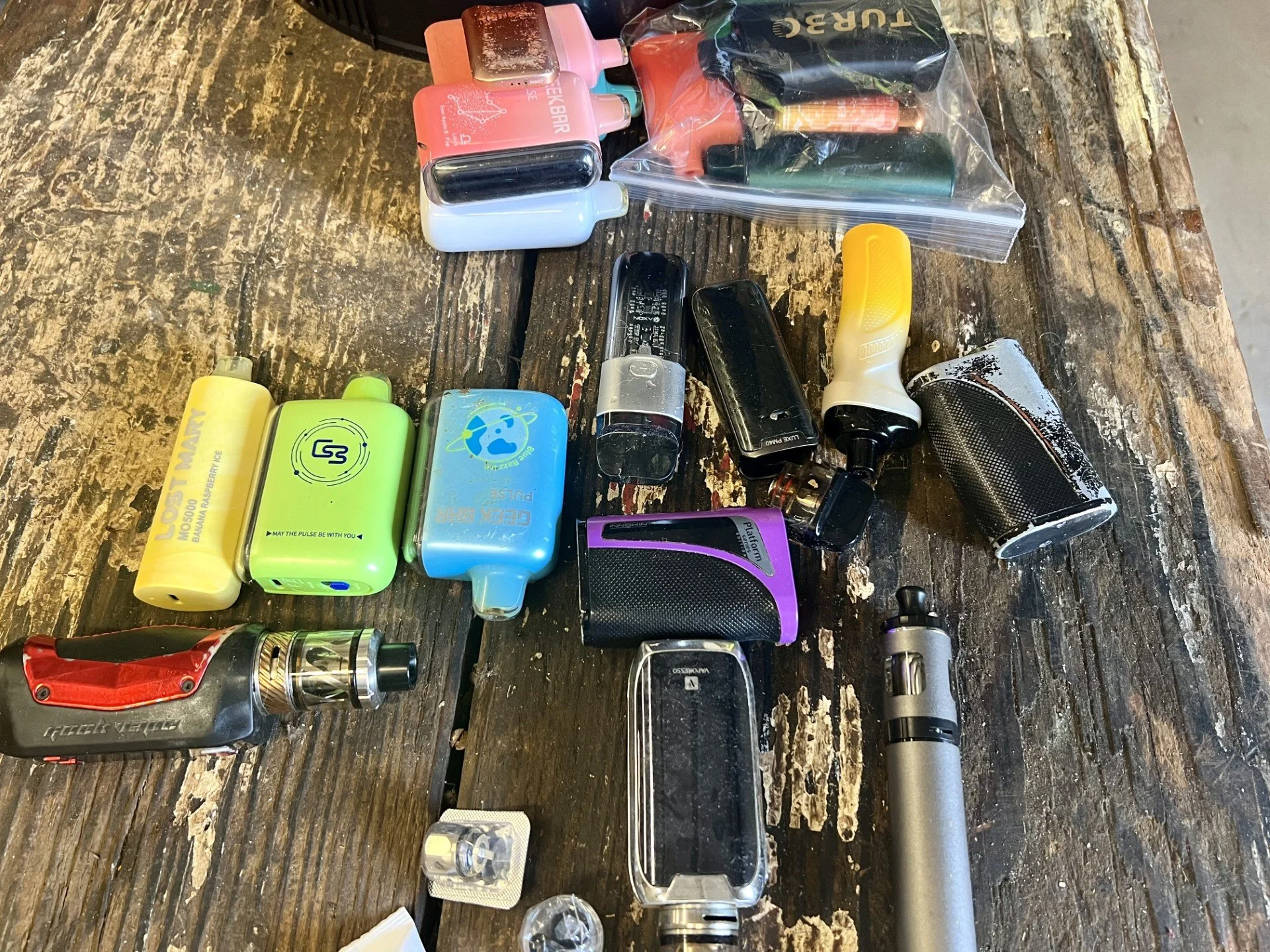
The Center for Sustainable Materials Management (CSMM) and the Product Stewardship Institute (PSI) have partnered to create a pilot program to collect nicotine vape waste — used and unwanted vapes (i.e., e-cigarettes and vaping devices) and other vape waste (cartridges, pods, vape batteries, e-liquids, etc.) — in several communities in New York State for proper management. Check out this press release for more information about the project.
Vapes may contain nicotine and lithium-ion batteries. When thrown in the trash, recycling bin, or littered, these components can contaminate water, harm wildlife and human health, and cause fires. This pilot program creates opportunities for household consumers and regulated entities, i.e., schools, to properly dispose of vape waste to protect human health and the environment.
Pilot collection coming soon. Contact participating vape collection locations for drop-off information
〰️
Pilot collection coming soon. Contact participating vape collection locations for drop-off information 〰️
Collection through this pilot is coming soon.
When launched, free drop-off of vape waste will be available at participating vape collection locations only for residents and schools in Erie, Monroe, Onondaga, Putnam, and Westchester Counties.

Other local household hazardous waste collection events and facilities may accept used vapes and e-liquids for proper management. If your county or municipality is not listed above, contact your local household hazardous waste collection events and facility to see if they collect vape waste.
Map Key:

Participating Pilot Locations
Collection Events (dates TBD)
-
Hazman, 177 Wales Avenue, Tonawanda, NY, 14150
-
WM Ecopark, 10 Avion Drive, Rochester, NY 14624
For information on disposal of vapes, contact the Monroe County, WM Ecopark at (585)753-7564.
-
Miller Environmental Group (Syracuse), 532 State Fair Blvd, Syracuse, NY 13204
For information on disposal of vapes, contact the Onondaga County, Miller Environmental Group (MEG) at (562) 605-7921.
-
For information to dispose of vapes, contact the Putnam County Health Department at 845-808-1390, extension 43231.
-
Household Material Recovery Facility, 15 Woods Road, Valhalla, NY 10595
Sprain Ridge Park, 149 Jackson Avenue, Yonkers, NY 10706
Charles Point Resource Recovery Facility, 3 John Walsh Blvd, Peekskill, NY 10566
Playland Park, 1 Playland Parkway, Rye, NY, 10580
For information on disposal of vapes, contact the Westchester County, Household Material Recovery Facility (H-MRF) at (914) 813-5438.
Map Locations
Best Practices for Vape Waste Management
Place vapes, leaking devices, and loose items (i.e., e-liquids, cartridges, bottles, etc.) in a resealable plastic bag (i.e., Ziploc)
Keep vape waste out of harm’s way when not in use
If you have any loose rechargeable batteries, tape the ends of the batteries and store them in a plastic bag or container and bring them to a collection site
Find a local drop-off location near you and bring your vape waste there for proper collection
-
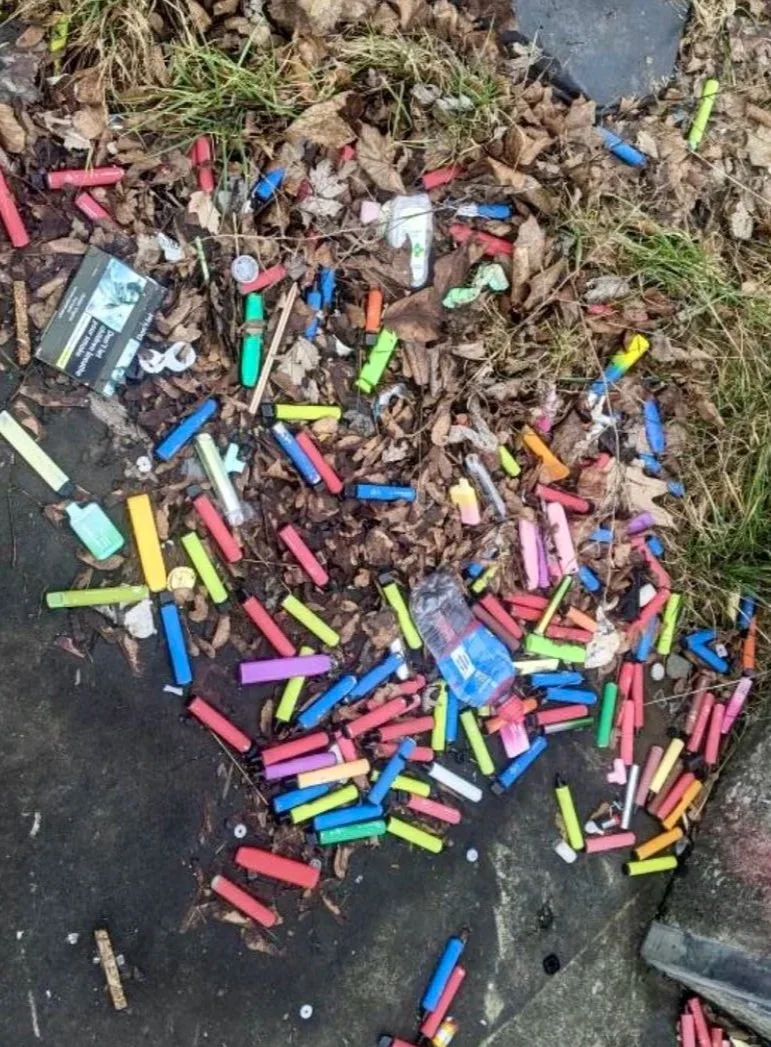
Improperly discarded vape products are showing up in schools, streets, and waterways. These devices contain lithium-ion batteries, nicotine, and plastics and are hazardous to health and safety, expensive to dispose of, and harmful to the environment.
Nicotine poses significant, immediate risks to human health and the environment, even in small doses or single exposure.
Aerosols created from vape use, contain harmful cancer-causing chemicals, including heavy metals such as nickel, tin, and lead; tiny particles of airborne pollutants that can be inhaled deep into the lungs; and flavorings such as diacetyl, a chemical linked to a serious lung disease.
When improperly disposed or littered, vapes end up in waterways where nicotine quickly leaches into the water and can poison aquatic wildlife and contaminate groundwater and water sources.
Lithium-ion batteries, when damaged or crushed, can spark and ignite.
Vapes tossed in public trashcans or littered on the ground have caused fires in parks, trails and open spaces. A single fire can cause immense destruction, including damage at material management facilities and sanitation workers, are at risk of injury, and even death from fires.
-
Vape waste is littering community spaces and schools, exposing children and young people to serious health and safety hazards in places where they spend much of their time. Vapes are also costly to manage. Schools may pay hundreds of dollars per pound for disposal services. Schools should not have to divert financial resources from education to manage vapes confiscated from students.
-
Generally, people do not know how to properly dispose of vape products. Surveys of vape users show that most of these products (90% or more) are put into trash cans, tossed on the ground, or even flushed down toilets. Widely available, convenient, and safe disposal systems are needed to recover and recycle lithium-ion battery components, keep electronic and plastic waste out of landfills, and stop nicotine from leaching into water sources.
-
While nicotine and cannabis vapes pose many of the same environmental and safety risks, cannabis products introduce additional regulatory and logistical complications for collection and disposal programs. Both products contain lithium-ion batteries and plastics, but residual THC in cannabis vapes is characterized as a controlled substance under federal law. This creates unique legal and logistical barriers for collection sites, waste transporters, waste processors, and take-back programs. As cannabis legalization expands across the country, so does the resulting gap in disposal program availability: cannabis vape users often have even fewer options for proper disposal than nicotine vape users.
Regardless of product type, the message is the same: never throw vapes in the trash or recycling bin.
Improperly discarded vapes are showing up in schools, streets, and waterways. These devices may contain lithium-ion batteries, nicotine, and plastics, are hazardous to health and safety, are harmful to the environment, and proper management of vape waste is expensive.
The Problem with Vape Waste
Additional Resources
Solvents, Automotive, Flammables, and Electronics (SAFE): Events
US EPA: Vape Disposal Recommendations
Advancing Tobacco Free Communities (ATFC), Cortland, NY: Tobacco and the Environment - Tobacco Free New York State
Public Health Law Center, NY: Tobacco Product Waste - NY | Public Health Law Center
Contact
If you have any questions about the pilot program or vape waste disposal, please utilize the form below.


About the Product Stewardship Institute (PSI)
The Product Stewardship Institute is a policy expert and consulting nonprofit that pioneered product stewardship and extended producer responsibility (EPR) in the United States. Since 2000, PSI’s research and pilot programs, facilitated dialogues and policy models, technical support and expert testimony have helped enact over 150 laws in 34 states across 21+ product categories. We work with local, state, and federal government officials, businesses, environmental organizations, academic institutions, and international and tribal governments to ensure that products and packaging are responsibly managed from design to end of life. Join us at www.productstewardship.us.